Free shipping sitewide!* View Details
Free shipping sitewide!* View Details

Light Bar vs. Pod Lights vs. Ditch Lights: Which Off-Road Lights Do You Need?
September 2, 2026
0
LED
LED lights
LED Ditch Light Kit
LED Light Mount
LED lightbars
LED light bars
Pod lights
What Is the Difference Between Light Bars, Pods, and Ditch Lights?
The main difference between these off-road lights comes down to size, placement, and where they put the light.
- LED light bars use a long housing to provide broad forward coverage.
- LED pod lights use compact housings for targeted lighting from many different mounting locations.
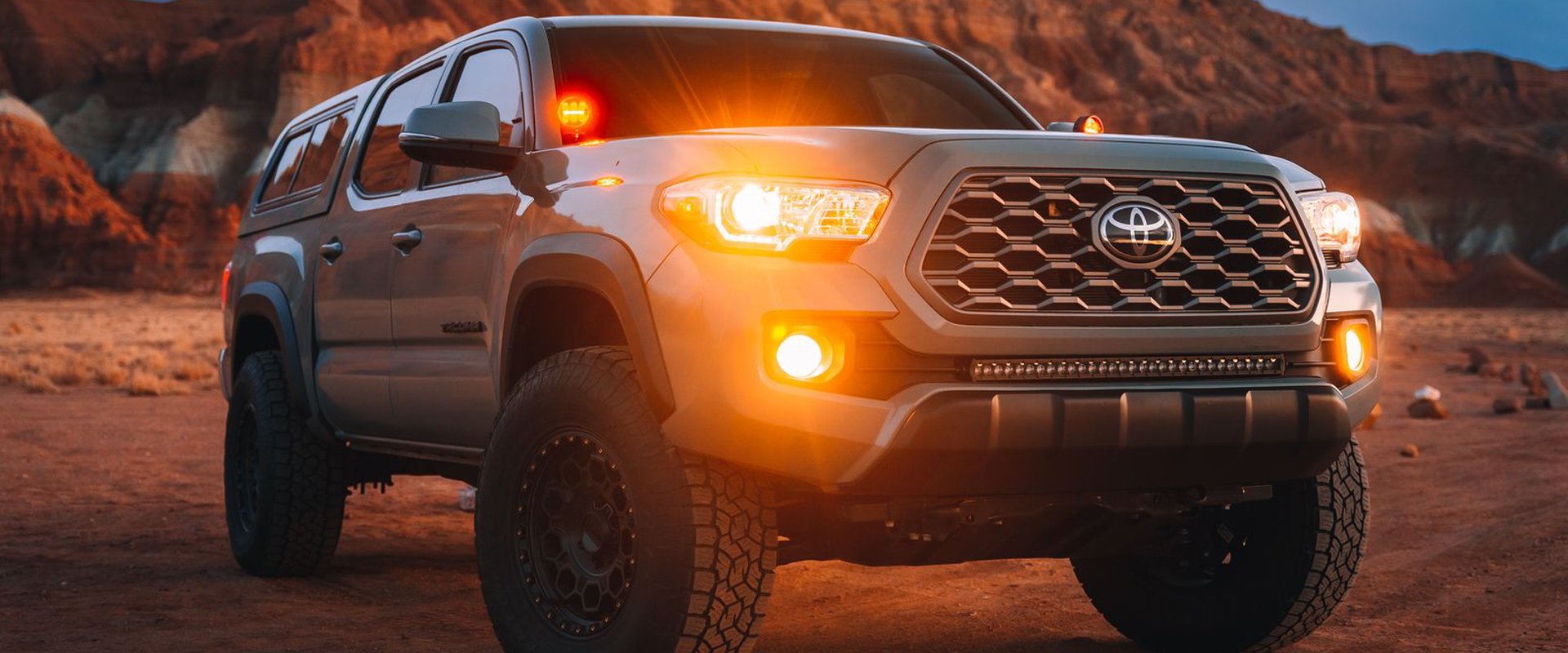
- Ditch lights are auxiliary lights mounted near the hood, cowl, hood hinges, or A-pillars and aimed toward the sides and front corners of the vehicle.
Think about the problem you want to solve before comparing brightness numbers.
If you need more forward visibility on a dark trail, start with a light bar or forward-facing pods. If your headlights already cover the trail ahead but leave the sides dark, ditch lights address a different visibility gap.
Get the Latest from Rough Country
Sign up for our newsletter to receive product updates, exclusive deals, and off-road tips straight to your inbox.
What Are LED Light Bars Best For?
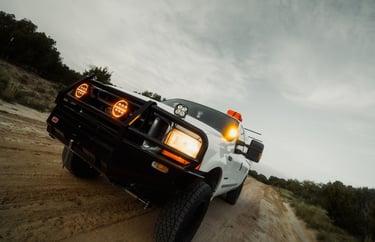
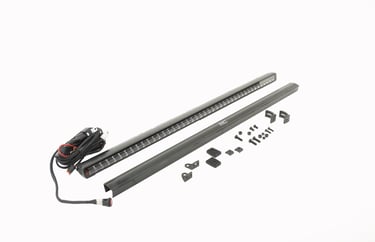
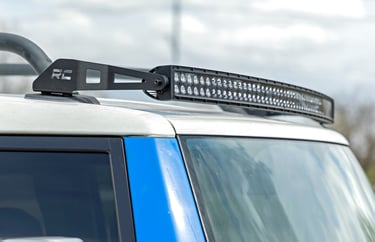
LED light bars work best when you want a large amount of forward-facing light from one mounting location.
Common locations include:
- Front bumpers
- Behind the grille
- Roofs
- Windshield frames
- UTV cages
- Roof racks
Light bars work especially well on open trails, farm roads, wide logging roads, desert terrain, and other areas where drivers need to see farther ahead.
Rough Country currently offers LED light bars in sizes ranging from compact bars to 50-inch models, with single-row and dual-row designs available across several lighting series.
For example, Rough Country's 12-inch Black Series Dual Row LED Light Bar uses a combination beam with an 8-degree spot section and 90-degree flood section. This layout provides concentrated forward lighting along with wider illumination near the sides.
Larger does not automatically mean better. Mounting location, beam pattern, terrain, glare, electrical demands, and available space all matter.
What Are Pod Lights Best For?
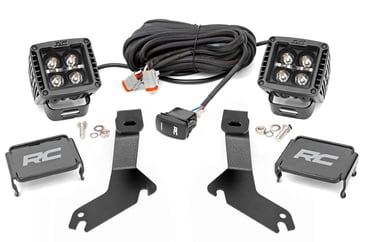
Pod lights work best when you need compact lights aimed at a specific area.
Their smaller size gives you more freedom than a long light bar. Common locations include:
- Front bumper corners
- A-pillars
- Hood or cowl mounts
- Rear bumpers
- Bed racks
- Roof racks
- UTV cages
- Flush-mounted bumper openings
Pods also work well when a full-width bar does not fit your bumper or when you want separate lights aimed in different directions.
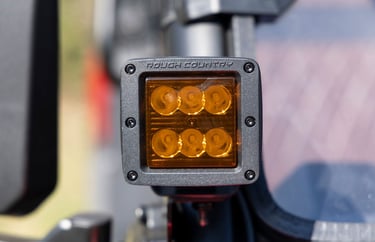
Rough Country currently offers compact LED pods in spot, flood, driving, SAE fog, flush-mount, DRL, and other configurations depending on the product.
For example, Rough Country's 2-inch Black Series flush-mount lights offer either spot or flood beam options. Another 2-inch Black Series flood model uses a 60-degree flood pattern for wide, close-range coverage.
This flexibility makes pod lights useful for technical trails where visibility beside the vehicle matters as much as distance.
What Are Ditch Lights?
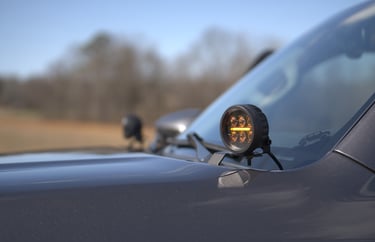
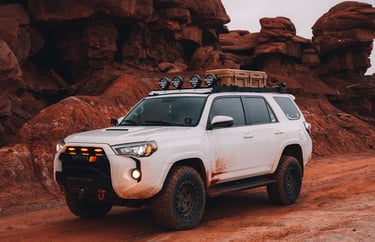
Ditch lights are auxiliary lights mounted high near the hood, cowl, hood hinges, or lower A-pillars and aimed outward to illuminate areas beside and slightly ahead of the vehicle.
They help fill the dark areas outside the main headlight beam.
Ditch lights are especially useful for:
- Tight wooded trails
- Sharp turns
- Trail intersections
- Road or trail shoulders
- Rocks near the edge of the trail
- Drop-offs
- Wildlife
- Low-speed technical terrain
Rough Country currently offers vehicle-specific ditch-light kits for numerous truck, Jeep, and SUV applications, including select Ford F-150, Bronco, Jeep Wrangler and Gladiator, Chevy Silverado, Toyota Tacoma, Tundra and 4Runner, Ram 1500, Nissan Frontier, and Toyota Land Cruiser models.
Fitment varies by vehicle year, make, model, and trim. Always check the product's fitment notes before ordering brackets or a complete ditch-light kit.
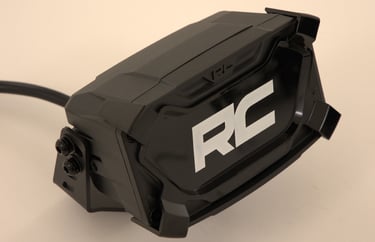
Are Ditch Lights Different from Pod Lights?
Usually, no.
A pod describes the physical light. A ditch light describes how and where an auxiliary light is mounted and aimed.
Many ditch-light setups use LED pods on vehicle-specific brackets near the base of the windshield. The lights point outward instead of straight ahead.
This distinction matters when shopping. A pair of pods does not automatically become a good ditch-light setup. You still need the right mounting brackets, beam pattern, wiring, clearance, and aiming position for your vehicle.
Spot vs. Flood vs. Combo Beam: Which Is Best?
Beam pattern determines where the light goes.
A bright off-road light with the wrong beam pattern might provide less useful visibility than a lower-output light placed and aimed correctly.
Spot Beam
A spot beam concentrates light into a narrower area.
Spot beams work best when you need more distance in front of the vehicle, such as:
- Open trails
- Long straight sections
- Faster off-road driving
- Rural property roads
- Forward-facing bumper lights
Flood Beam
A flood beam spreads light across a wider area at shorter distances.
Flood patterns work well for:
- Ditch lights
- Tight wooded trails
- Rock crawling
- Campsites
- Work areas
- Close-range trail visibility
Combination Beam
A combination beam blends focused forward lighting with wider side coverage.
This pattern makes sense for a general-purpose light bar when you want one fixture to cover several lighting needs.
Rough Country's Black Series Dual Row light bars offer examples of combination patterns. Current 12-inch, 20-inch, and 30-inch Black Series Dual Row models list 8-degree spot and 90-degree flood components.
Are More Lumens Always Better for Off-Road Lights?
No. Lumens measure total light output, but the highest lumen number does not automatically provide the best visibility for your driving.
Beam pattern, optics, mounting height, aiming, terrain, and the location of the light all affect what you see from the driver's seat.
For example, a high-output light aimed directly in front of your bumper might create too much foreground brightness while leaving other areas dark. Your eyes adjust to the brightest part of your view, which makes balanced lighting important.
Compare output after deciding where you need light and which beam pattern fits the job.
Should You Choose a Light Bar or Ditch Lights First?
Choose based on the visibility problem you experience most often.
Start with a light bar if:
- You need more forward visibility
- You drive open trails
- You want broad coverage from one mounting location
- Your headlights fall short on longer trail sections
Start with ditch lights if:
- Your forward visibility is already adequate
- You drive tight or wooded trails
- You struggle to see around corners
- You want more light along trail edges
- You need a compact setup
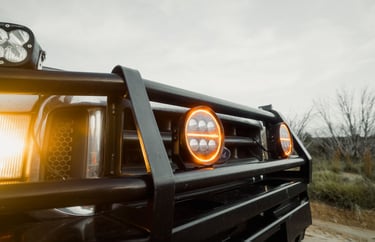
For mixed trail driving, a light bar paired with ditch lights provides more complete coverage because each handles a different part of your field of view.
Do You Need Both a Light Bar and Pods?
Many off-road vehicles benefit from using both.
A light bar handles broad forward illumination while pods fill specific areas missed by the main beam.
A balanced trail setup might include:
- A bumper-mounted combination-beam light bar for forward coverage
- Flood-pattern ditch lights aimed toward the trail edges
- Rear-facing pods for backing or trail work
- Rock lights for tire and underbody visibility
You do not need every lighting type. Build around your driving conditions instead of adding lights based on output alone.
A truck used on open property roads has different needs than a Jeep crawling through tight wooded trails. A UTV used after dark also has different mounting options and visibility needs than a daily-driven pickup.
What Size Light Bar Should You Get?
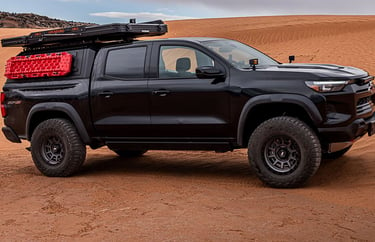
Choose light-bar size based on the available mounting space and the type of coverage you want.
Rough Country's current LED light-bar lineup includes multiple sizes from compact bars through 50-inch models.
Smaller bars work well in bumpers, grilles, and tighter mounting locations. Longer bars suit roofs, windshield areas, wide bumpers, and other locations with more space.
Before ordering, check:
- Available mounting width
- Bracket location
- Vehicle-specific fitment
- Wiring requirements
- Hood and windshield clearance
- Other accessories near the mounting location
- Desired beam pattern
Do not select a light bar based only on its advertised length. Brackets, housing dimensions, and vehicle-specific mounting requirements also affect fit.
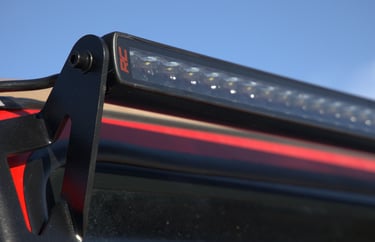
How Do You Choose the Best Off-Road Lights for Your Vehicle?
Start with where you need more visibility, then choose the light style and beam pattern.
Ask yourself:
- Do I need more light straight ahead or toward the sides?
- Do I drive faster open trails or slower technical terrain?
- Where does my truck, Jeep, SUV, or UTV have mounting space?
- Do vehicle-specific brackets exist for my application?
- Do I need spot, flood, or combination coverage?
- Is the product intended only for off-road use?
- Does my electrical setup support the lights I want to install?
For broad forward coverage, look at LED light bars.
For flexible, targeted lighting, look at LED pods.
For better peripheral trail visibility, look at vehicle-specific ditch-light kits.
The best setup puts usable light where you need to see, rather than chasing the largest fixture or highest lumen number.
FAQs
Are light bars better than pod lights?
Light bars are better for broad forward coverage from a single mounting location. Pod lights offer greater mounting and aiming flexibility. The better choice depends on your terrain and where you need additional visibility.
What are ditch lights used for?
Ditch lights illuminate the areas beside and slightly ahead of a vehicle. They help drivers see trail edges, tight turns, obstacles, drop-offs, and other areas outside the primary headlight beam.
Are ditch lights the same as pod lights?
Ditch lights often use pod lights, but the terms describe different things. A pod refers to the compact light housing. A ditch light refers to an auxiliary light mounted near the hood or A-pillar and aimed toward the side of the vehicle.
Is a spot or flood beam better for off-roading?
Spot beams work better for long-distance forward visibility, while flood beams spread light across a wider area at shorter distances. Mixed-terrain vehicles often benefit from using both patterns in different mounting positions.
Where is the best place to mount off-road lights?
The best location depends on the lighting job. Bumpers and grilles work well for forward lighting, A-pillars or hood areas work well for ditch lights, and roof mounts suit broader long-range coverage. Vehicle-specific mounting options vary.
Get the Latest from Rough Country
Sign up for our newsletter to receive product updates, exclusive deals, and off-road tips straight to your inbox.
![2-inch Square Flush Mount Cree LED Lights w/ Amber DRL [70803BLKDRLA]](https://media.prod.roughcountry.com/cdn-cgi/image/width=155,format=webp,fit=cover/media/catalog/product/a/m/amber.jpg)